

Trips and planning · Guide
Crossing large bodies of water
Also: lake crossing, open water crossing, open water
Crossing lakes, fjords and sea inlets by packraft: what matters when it comes to wind, waves, cold and planning.
A long crossing is one of the most beautiful and at the same time riskiest experiences in packrafting. We paddled eleven kilometres across Akkajaure in Lapland, and in autumn headed for an island as a pair in the Omega C2B+. What we learned and what accident analyses show:
Why crossings are tricky
- Packrafts are slow: without current 3 to 5 km/h is realistic, so ten kilometres take two to three hours.
- Packrafts are light and sit high on the water, so wind pushes them off course a lot.
- Waves grow with the distance the wind blows over (fetch). In the middle of the lake it's often much rougher than at the shore.
- Most packrafts have only one air chamber.
- In cold water there's little time after a capsize.
Luc Mehl analysed fatal packraft accidents. On open water, wind was a frequent factor, and the recurring pattern was separation from boat and partners. On Lake Nahuel Huapi in Argentina, a group was surprised by violent waves on a crossing of about 2 km, with around 30 km of fetch before it.
- 1Wind from land out over the water
- 2Waves grow with distance
- 3the boat drifts away
How we plan a crossing
- Check weather and wind for the whole period, not just for the start.
- Start early in the morning, when the wind is often weakest.
- Plan the route in stages from island to island or along the shore, even if it's longer.
- Set a turnaround point: if it gets rougher on the way, turn back rather than fight on.
- Don't cross in offshore wind.
- Stay together, boats within calling distance.
- Cold protection for the water temperature, not the air temperature.
- 1direct line: risky
- 2from island to island: safer
Gear
Always wear your PFD, a dry suit in cold water. A packraft with a spray deck or self-bailing and plenty of freeboard copes better with waves. A fin improves tracking. Practise re-entry from the water beforehand, with luggage. Phone waterproof on your body, a satellite communicator on wilderness trips.
Our videos on this
Our videos are in German. On YouTube, most of them are automatically dubbed into English, and some reviews have an English voice-over.
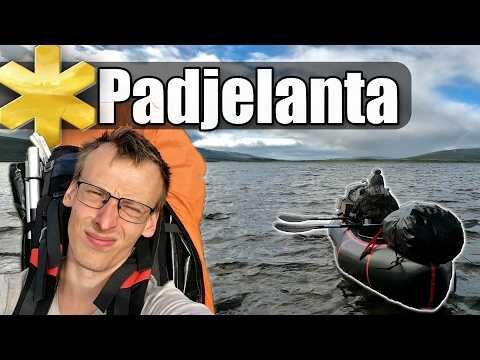
By packraft to Sarek and Padjelanta
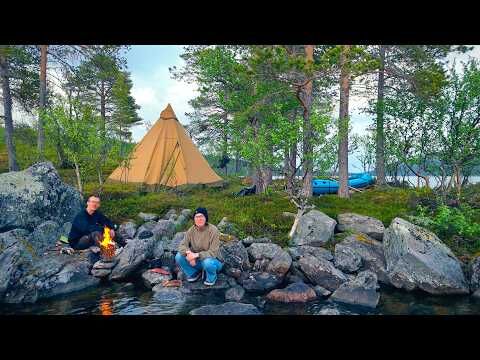
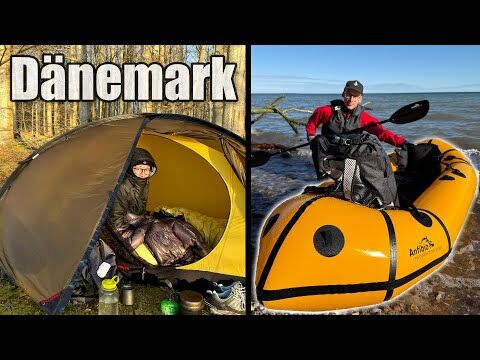
Matching trips of ours
Sources and further reading
- Luc Mehl: Packrafting Fatalities
- Wikipedia: Cold shock response
- Packrafting Store: comparison tables with legend
Research as of 13 Nov 2026. We have marked manufacturer information as such.