

Whitewater and rivers · Guide
Whitewater for packrafters: dos and don'ts
Also: whitewater basics, whitewater tips
What you should know before your first whitewater in a packraft: gear, reading the river, basic techniques, swimming and the most important rules.
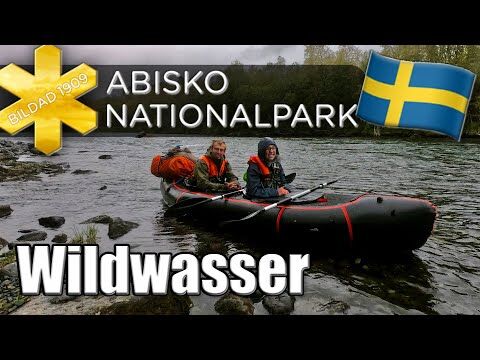
Packrafts make whitewater more accessible than ever: they are forgiving, stable and glide over a lot. That's exactly the trap. The hazards in a river, namely holes, trees, siphons and cold water, are the same for every boat. Our own first whitewater in Abisko was a lesson in how not to do it.
The most important rules
- Never go into whitewater alone; at least three people is ideal.
- Only run what you could also swim. The Packrafting Store puts it the same way: don't paddle sections you couldn't manage swimming.
- Scout unknown spots; when in doubt, portage.
- Helmet, PFD, throw bag, knife and whistle are mandatory, plus a dry suit in cold water.
- Check the gauge: in high water the boat stays on land.
- Never run weirs without checking them first.
Reading the river
Smooth V-tongues show the way through, eddies behind rocks are the resting spots. White, backward-curling waves are holes. It gets dangerous wherever water flows through or under something: trees, siphons and undercuts.
- 1Main current
- 2Rock
- 3Eddy
- 4Eddy line
- 1Tree in the water
- 2Siphon
- 3Undercut rock
Basic techniques
Before heading into whitewater, the forward stroke, sweep stroke, brace and edging should be second nature. The most important technique according to Wikibooks is the eddy turn, entering an eddy deliberately. Then there's the ferry, which lets you cross the river without drifting off.
- 1Current
- 2Bow angled into the current
- 3Destination
If you swim
First on your back, feet first and at the surface, then actively crawl on your front to an eddy or the bank. Never stand up in the current while it's deeper than knee-deep. And: if the boat is holding you in the current, let it go.
- 1defensive: on your back, feet first
- 2aggressive: crawl to the eddy
Gear for whitewater
A whitewater-capable packraft has a rising bow, is stiff and gives control via thigh straps, footrest and a snug backrest. Whether spray deck or self-bailer, we explain in the guide Self-bailer or spray deck?
Tip: A course helps most. The Packrafting Store offers whitewater courses, and canoe clubs are opening up to packrafters too.
Matching gear
Advertising: This page contains affiliate links (marked with *). If you buy through them, we earn a commission at no extra cost to you.
Hiko Buckaroo helmet* (advertising, external link, opens in a new window)Throw bag* (advertising, external link, opens in a new window)Thigh straps* (advertising, external link, opens in a new window)Packraft courses* (advertising, external link, opens in a new window)
Our videos on this
Our videos are in German. On YouTube, most of them are automatically dubbed into English, and some reviews have an English voice-over.
Abisko: our first whitewater trip (please don't copy us)
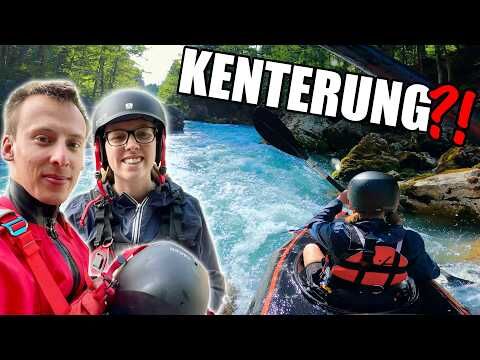
Matching trips of ours
Sources and further reading
- Wikibooks: Kajak/Wildwasser (German)
- Wikibooks: Kajak/Techniken (German)
- Wikibooks: Kajak/Strömungsformen (German)
- Packrafting Store: product and usage FAQ
- Luc Mehl: Packrafting Equipment Guide
- Luc Mehl: Packrafting Fatalities
- Wikipedia: International scale of river difficulty
Research as of 13 Nov 2026. We have marked manufacturer information as such.